DMCC: A self-funded blueprint powering Dubai’s southern corridor
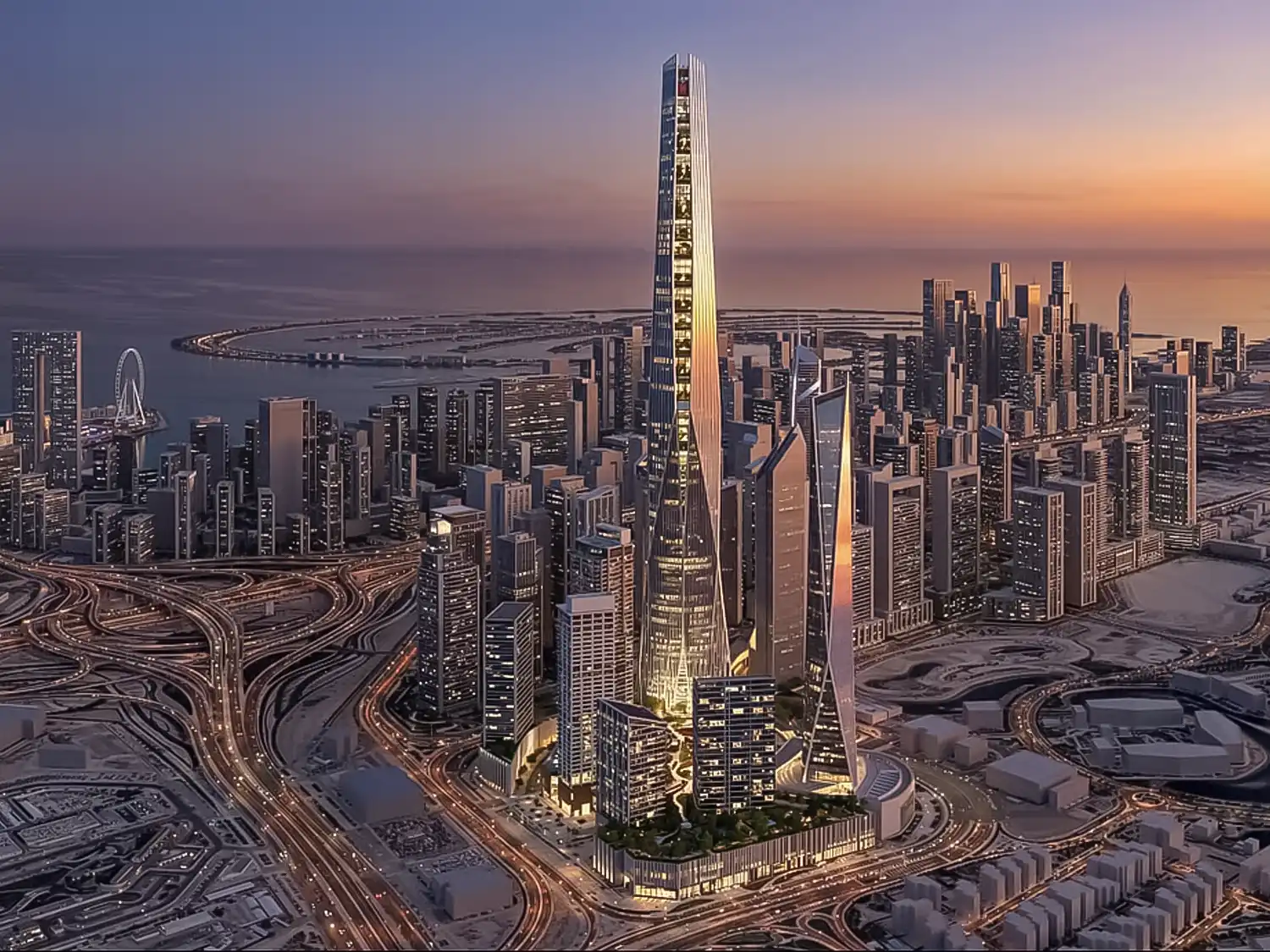
The recent unveiling of plans for a 600-metre-plus megatall tower in Uptown Dubai has once again drawn attention to the development strategy of Dubai Multi Commodities Centre (DMCC).
At a time when global real estate markets remain sensitive to geopolitical and economic shifts, DMCC has built a reputation for resilience through a self-funded, demand-driven growth model — one that has transformed Dubai’s southern corridor into a global business destination.
A financial strategy built on independence
Unlike many large-scale developers that rely heavily on conventional bank debt, DMCC established its early infrastructure through a landmark $200 million sukuk issuance. The proceeds were strategically allocated to deliver the district’s foundational commercial anchors:
- Almas Tower
- Gold Tower
- Silver Tower
This early move laid the groundwork for what would become one of the region’s most successful free zone ecosystems.
Among these, Almas Tower became a defining milestone. Developed between 2005 and 2008, it achieved a record sell-out within hours of launch — primarily to diamond and precious stone traders — underscoring the pent-up demand for a purpose-built global commodities hub.
The success was not simply about office space; it was about creating a specialised, trade-focused ecosystem.
Growth through global cycles
DMCC’s model was tested during the 2008 global financial crisis, when many markets contracted sharply. Instead of halting expansion, the district advanced development plans, including the delivery of One JLT, a LEED Gold-certified commercial building completed in 2016.
This period reinforced a key principle: premium, well-located commercial space in a regulated and business-friendly environment would continue to attract tenants even amid global turbulence.
The pattern repeated during the post-pandemic recalibration. While uncertainty shaped global markets, DMCC pressed ahead with the Uptown masterplan, culminating in the delivery of Uptown Tower between 2019 and 2023. The tower’s rapid leasing to multinational corporations and high-end residential buyers reaffirmed sustained demand for Grade-A space in Dubai.
Phase 3 and the megatall vision
With DMCC now home to more than 26,000 registered companies, the next chapter includes Phase 3 of the Uptown District — highlighted by a proposed 600m-plus mixed-use megatall tower.
The project is expected to follow a hybrid financing model while maintaining the district’s disciplined, reinvestment-led strategy. The approach preserves flexibility in leasing, asset management, and long-term capital structuring.
This model allows DMCC to remain less exposed to short-term credit cycles and instead reinvest profits into landmark developments that reinforce the district’s global positioning.
Tokenisation: real estate meets Web3
Looking ahead, DMCC is exploring property tokenisation, introducing fractional ownership models that would enable digital investment access to real estate assets.
By leveraging blockchain-based structures, tokenisation could lower entry barriers for international investors, mirroring the transparency and liquidity long associated with commodities trading. This step would align the district with the broader Web3 economy and position it at the intersection of real estate and digital finance.
A catalyst for Dubai’s long-term growth
DMCC’s evolution reflects a broader shift in Dubai’s development narrative — from rapid expansion to strategic ecosystem-building. The southern corridor, once viewed as an emerging zone, is now a key commercial and residential anchor for the emirate.
By combining architectural ambition with financial independence and digital innovation, DMCC continues to shape a growth blueprint built on:
- Infrastructure-led demand creation
- Reinvestment over leverage
- Ecosystem-driven planning
- Global trade connectivity
As Phase 3 approaches, Dubai’s southern corridor stands as evidence that sustainable growth is not only about scale — but about strategic execution.
Source: Gulf News